Comprehensive Guide to Solana Architecture
Discover the Sovereign Validator standard. A deep dive into Solana's architecture, Proof of History, and why bare-metal infrastructure is critical for security.
A transparent side by side comparison of Solana RPC providers. We compare Carbium, Helius, and QuickNode on pricing, rate limits, and Swiss-grade reliability.
The race for the edge. Standard RPC vs. gRPC now compared with example use cases. Carbium offers the most price-efficient gRPC on Solana.
Explores the physical reality of Carbium’s infrastructure: why virtualization kills performance and what Swiss-engineered stack means.
The SPDR Solana Validator operates from the Swiss Alps, bunker-graded server with a singular mission: to prove that Solana’s decentralization isn’t just about code and consensus algorithms. It’s about geography, ownership, and the willingness to build infrastructure where the network needs it most.
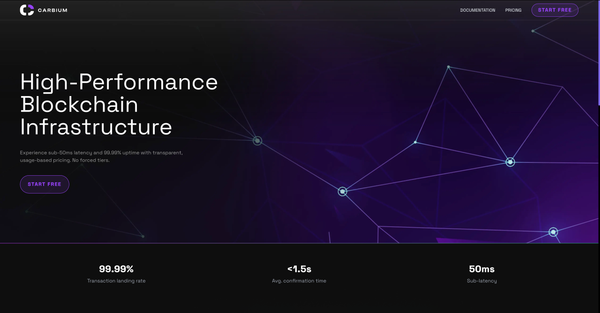
Solana demands speed and uptime. Carbium RPC delivers Swiss-built reliability and enterprise-grade performance, priced for builders.
Stake-Weighted Quality of Service: Where Solana’s Protocol Meets Carbium
Discover how Carbium enables Gasless Swaps on Solana, execute on-chain trades without holding $SOL, removing barriers and simplifying DeFi access
Introduction The blockchain ecosystem is evolving rapidly, and smart contracts have become the backbone of decentralized applications (dApps). Among the leading platforms supporting smart contracts, Ethereum and Solana stand out due to their technological sophistication and strong developer communities. However, they differ significantly in how they structure and execute smart